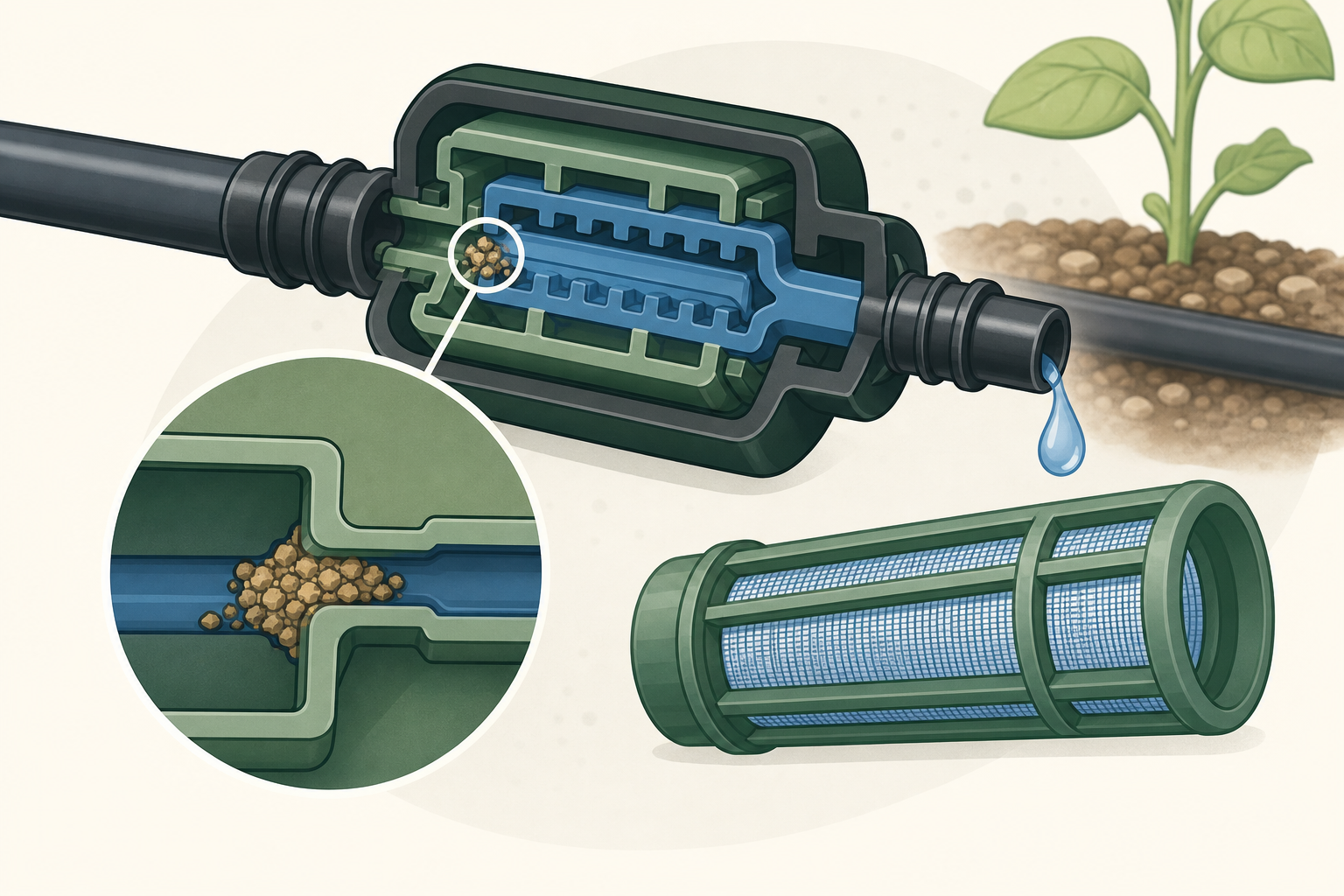
Recurring emitter clogs are a symptom of contamination in the water or deposits forming inside the system. Replacing one blocked emitter may restore flow today, but the clog will return until the source is controlled.
Three common types of clogging
Physical particles
Sand, soil, rust, and pipe debris can enter through the water source or during repairs. A correctly sized screen or disc filter is the main defense.
Biological growth
Algae, bacteria, and slime are more common with ponds, tanks, wells, or systems exposed to light and warm water. They can coat filters and small emitter passages.
Mineral deposits
Hard water can leave calcium or other precipitates. Iron in well water can also create deposits. The correct treatment depends on water chemistry; guessing with acids or chlorine can damage equipment or create a safety hazard.
What to do first
- Inspect and clean the filter.
- Open line ends and flush until the water is clear.
- Check several emitters to see whether clogging affects one branch or the whole zone.
- Replace emitters that cannot be restored without changing their opening.
Prevent the next clog
- Use the filter mesh specified by the emitter manufacturer.
- Choose a filter with enough flow capacity for the zone.
- Keep end caps accessible and flush laterals periodically.
- Prevent soil from being sucked into open emitters when the system drains.
- Inspect filters more often when the source carries heavy sediment.
Should you clean an emitter?
Removable emitters can sometimes be rinsed according to their manufacturer’s instructions. Do not push a needle or drill bit into the outlet: it can permanently change the flow. With inexpensive sealed emitters, replacement is often more dependable.
When water testing makes sense
If mineral scale, orange deposits, slime, or rapid repeated clogging appears, test the source water and ask an irrigation professional or water-treatment specialist for a compatible treatment. Chemical injection requires correct equipment, backflow protection, dosing, and safety procedures.
A clean filter plus regular flushing prevents most household drip problems. Persistent clogs point to a water-quality issue or unsuitable filtration—not bad luck.
Related guides
Not sure where to start? Open the Irrigation Troubleshooter.